Forex Trading for Beginners: A Complete Roadmap to Currency Markets
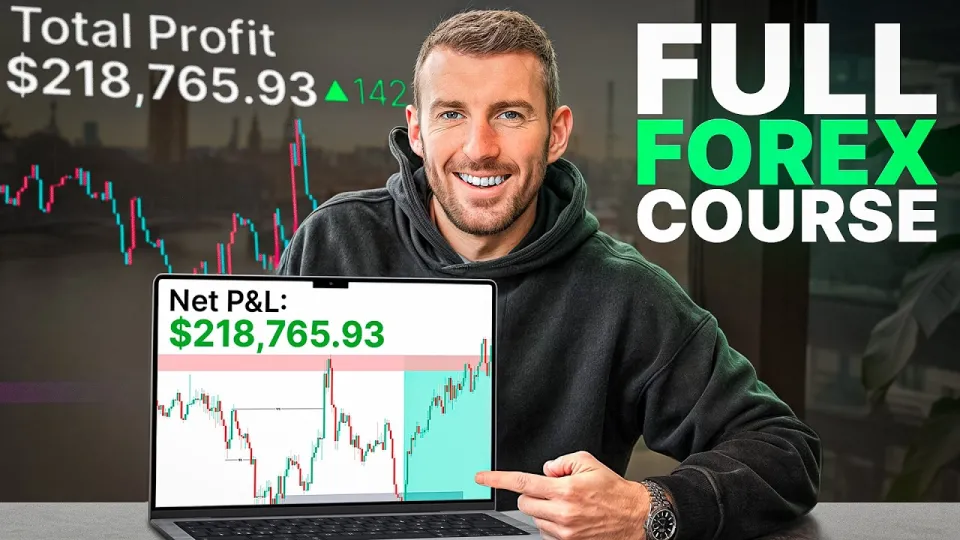
Video: Beginners Guide To Forex Trading In 2026 (+3 hours)
You can order the same kind of articles for your own video to boost it on YouTube and Google. Just message the Telegram bot @sat_sit_bot. The bot writes and publishes the articles itself (with your YouTube video embedded) on popular topical websites (no ads). Try it free: 50 articles on us.
· based on the channel Matt Donlevey - Photon Trading
Forex trading for beginners is the process of speculating on currency price movements through a broker, using technical and fundamental analysis to identify high-probability entries and exits. Unlike stock markets, forex operates over-the-counter 24 hours a day, five days a week, with currencies quoted in pairs such as EUR/USD. To start, you need a clear strategy, disciplined risk management, and a solid understanding of market mechanics—concepts that Matt Donlevey covers extensively in his free Photon Trading course, available at Free Photon Trading Course + Cheatsheets.
What Is Forex Trading and How Does It Work?
Forex trading involves buying one currency while selling another, profiting from changes in the exchange rate. The market is decentralized, meaning trades occur directly between participants via electronic networks rather than a central exchange. Major participants include banks, corporations, hedge funds, and retail traders. Retail access is provided by brokers who quote bid and ask prices; the difference (the spread) is their compensation. Leverage allows traders to control larger positions with a small deposit, but it amplifies both gains and losses. According to the Bank for International Settlements, daily forex turnover surpassed $7.5 trillion in 2022, making it the world's largest financial market.
Why Market Dynamics Matter More Than Chart Patterns
Technical analysis often gets criticized for relying on geometric shapes that don't explain price movement. The real driver is market microstructure—how orders flow, how liquidity is provided, and how auctions set prices. Understanding concepts like the order book, bid-ask spread, and auction market theory gives you a logical foundation for a trading strategy. Matt Donlevey emphasizes that without this underlying logic, patterns are just noise. His course dedicates significant time to order flow and market dynamics, which he argues are essential for consistent profitability.
Building a Trading Strategy: Key Components
A complete forex strategy integrates several elements: market structure, supply and demand zones, liquidity, and multi-timeframe analysis. Market structure identifies trends and reversals through swing highs and lows. Supply and demand zones highlight areas where institutional orders may cluster. Liquidity concepts explain why price often moves toward areas with resting orders (stop losses and entry orders) before reversing. Multi-timeframe analysis ensures trades align with the broader trend. Donlevey's Photon Strategy combines these into a systematic approach, with clear rules for entries, exits, and trade management.
Risk Management and Psychology for Beginners
Risk management determines survival. A common rule is to risk no more than 1-2% of account equity per trade. Position sizing calculators help determine lot size based on stop-loss distance. Money management also involves setting daily loss limits and avoiding overleveraging. Trading psychology is equally critical: emotions like fear and greed lead to impulsive decisions. Donlevey suggests mastering the strategy first—building an edge—before focusing on psychological aspects, as confidence grows from proven results. Journaling trades helps identify behavioral patterns and refine the plan.
Common Mistakes and How to Avoid Them
Beginners often make three critical errors: overleveraging, trading without a plan, and failing to backtest. Overleveraging amplifies losses rapidly; using too much leverage can wipe out an account in minutes. Trading without a written plan leads to inconsistent decisions and emotional trading. Backtesting—manually reviewing historical charts—validates a strategy's edge before risking real money. Donlevey also stresses the importance of choosing a regulated broker with transparent costs and executing trades according to the plan, not impulses.
Useful Resources
- Free Photon Trading Course + Cheatsheets – comprehensive beginner guide with downloadable materials.
- Photon Mentorship – advanced program for funded trading.
- Free Telegram Channel – analysis, trade recaps, and tips.
- Instagram: @photontrading – updates and insights.
Final Thoughts
Forex trading offers opportunity but demands education and discipline. A structured approach—covering market dynamics, strategy, risk management, and psychology—is essential. Matt Donlevey's 3-hour beginner guide on the Photon Trading channel provides a free, comprehensive foundation that rivals paid courses. Use the free course link to access the full material and start building your trading plan today. Remember, success in forex comes from consistent application, not shortcuts.
Key takeaways
- Forex is a decentralized market where currencies trade in pairs; daily volume exceeds $7 trillion.
- Retail traders typically access forex through brokers offering leverage, with spreads as a primary cost.
- A robust trading strategy combines market structure, supply and demand, and liquidity concepts.
- Risk management—position sizing and stop-loss placement—is crucial for long-term survival.
- Matt Donlevey's Photon Trading offers a free 3-hour beginner guide covering these topics in depth.
Questions & answers
How much money do I need to start forex trading?
You can start with as little as $100 with a micro account, but to trade effectively and manage risk, $1,000–$5,000 is more realistic. Leverage allows smaller deposits, but risk of loss remains high. Focus on learning first, then scale gradually.
Is forex trading gambling?
No, forex trading is not gambling if approached with a tested strategy and strict risk management. It involves analysis and probability, not pure chance. However, without discipline, it can resemble gambling.
How long does it take to become profitable?
Most traders take 1–3 years to become consistently profitable. It requires dedicated study, backtesting, and psychological adjustment. Results vary based on effort and market conditions.
Can I trade forex part-time?
Yes, many trade part-time by focusing on higher timeframes (4H, daily) or specific sessions like the London open. It requires flexibility and a clear plan, but part-time trading is feasible.
Source: Beginners Guide To Forex Trading In 2026 (+3 hours) · Markdown version